Life, Love & Wrongs
-hebraicstudies.net-
Please do NOT visit this
site on Shabbat or on the מוֹעֲדִים - Mo’a’dim - Feasts!
“This is My NAME FOREVER, and this
is My MEMORIAL to ALL GENERATIONS.” Shemot -
Exodus 3:15. (JPS).
“I am יְהוָה, that is My NAME; and My
GLORY will I not give to another”. Yeshayahu – Isaiah 42:8. (JPS).
Throughout this site I will use anyone of the following
three versions of the TaNaKh: 1.
“Jewish Publication Society” (JPS), 2. “Sefaria.org” (SEF), 3. “Mechon-Mamre.org” (MEC).
Colour coded
details of the - TaNaKh: 1. Torah =
History & Law, 2. Nevi’im =
The Prophets. 3. *Ketuvim = all
other Writings).
*The Ketuvim - includes, Poetical
books - Psalms, Proverbs, Job, the Megillot, or Scrolls - Song
of Solomon, Ruth, Lamentations of Jeremiah, Ecclesiastes, and
Esther, prophecy of Daniel, and history of Ezra, Nehemiah, and Chronicles
I & II.
Some
minor alterations have been made relating to Names and Attributes having been
corrected.
YYYYYYY
A study based on the responsibilities of marriage, etc.
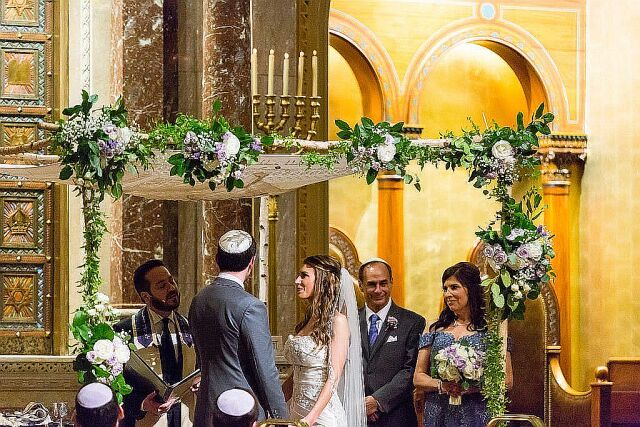
A delightful young couple commence a loving life together
under the Chuppah (canopy) in their Synagogue.
This is not one of my usual studies, far from it, but it is certainly one that needs to be covered: I will cover a life of love in marriage, as well as a certain other subject.
I will be
covering, what could be considered what can be a rather touchy subject. However
it came about to a question I was asked quite some time ago. Yet I never felt
that it was a subject I would ever write about, but today I was suddenly
challenged to do so. Thus, I pray that the contents will be read with a good
heart and learn from what it speaks about, as it covers a relationship between
a husband and wife, as well as another subject that also needed to be touched
on.
We should be
living a life that is filled with goodness, and a true healthy love for ones
dear ones, especially your darling wife!
We should be
all be living a loving and a caring life with your chosen ones, especially with
your wife, as I did for so long, may she rest in peace!
Living a well
balanced Life:
As we will all
know, finding the proper balance between work and family life can certainly be a
challenge, something which men have been dealing with since the beginning of
time. For it seems, that there never seems to be sufficient time to do
everything that needs to be done. In our daily rush and attention to our multifold duties, we often neglect those who are the
closest to us.
Our beloved
Torah, most brilliantly, has a specific obligation of עוֹנָה
- ‘Onah’. Whilst
it is better known as the obligation of conjugal rights, its most
basic application is the requirement of spending time with one’s beloved wife.
This obligation can often depend on various factors, most importantly one’s
work duties. The obligation of ‘onah’ ranges
from every day for תַּיָּלִים
- tayalim, those who have much leisure time to
stroll around town with few worries, to once every six months for sailors whose
journeys take them away from home for such long stretches of time.
Such a lengthy
hiatus can be allowed only with the approval of one’s wife, either explicit, or
implicit by agreeing to marry one involved in such an occupation, that could
take the husband so far away for extended times. That such is the case is
evident from a rather fascinating but a common question about “A donkey driver
who becomes a camel rider, what” is the law? The obligation of ‘onah’ for a donkey driver, who would travel to bring
produce from surrounding villages, being simply be
once a week. However a camel driver who traveled so
greater distances had an obligation of ‘onah’ only
once a month. For those who have no means of support, taking a job, any
job, takes precedence. But we must never forget that one’s basic needs should
be met, spending time together is the desire of most stay at home wives.
What does
matter is that decisions by the husband should be discussed with the wife and a
satisfactory resolution for all in the family can then be reached. It is not an
easy task to balance the need for time, money, and work satisfaction in a
spirit of ‘Shalom Bayit’ or peace at home. But
that is what marriage was all about, working out all things together!
Mitzvah Directives:
The mitzvah of עוֹנָה
- ‘Onah’
entails the unity of husband and wife, becoming one in warm and extreme love,
living a life of supreme happiness. He gives her pleasure to the best of his
ability, until she climaxes, and connects with her in utter synthesis until he
ejaculates inside her where she may conceive, as it says, “He shall not
diminish her food, her clothing, or her conjugal rights” (Shemot 21:10). Since
man is limited in his physical capabilities, the mitzvah of ‘Onah’ is determined according to each individual’s physical
abilities and occupational demands. Therefore, tayalim,
healthy people, for whom livelihood is attained easily, are obligated to fulfil
the mitzvah of ‘Onah’ every day. Regular workers are
obligated to be active twice a week, and people who work out of the city are
required to fulfil this Mitzvah once a week. Additionally, when either spouse
desires intimacy, the mitzvah of ‘Onah’ stipulates
that the other must provide.
This Mitzvah
is the essence and foundation of marriage. One who denies it in order to cause his wife pain, violates the biblical prohibition, “He
shall not diminish … her conjugal rights”. If he unintentionally neglects to
perform this mitzvah, out of sheer carelessness, inadvertently hurting his
wife, he violates a prohibition. Some say, even if not deliberate, his sin is
still a Scriptural transgression!
Moreover, by
performing the mitzvah of ‘Onah’, husband and wife
thoroughly fulfil the command, “Love your fellow neighbour (Jew) as yourself”
(Vayikra 19:18). The key element of this mitzvah is that each spouse ensures
the wellbeing to the best of his or her ability. The greatest pleasure that
humans have in this world is connected to the Mitzvah of ‘Onah’;
therefore, a husband who deprives his wife of this pleasure that satisfies her
is exploiting her, since no one but he may provide her that pleasure. Likewise,
if a wife deprives her husband from this pleasure, she is exploiting him, since
she is the only person in the world who can fill that void.
Revocation of
this Mitzvah is the principle grounds for divorce. If a husband claims to be
repulsed by his wife, that he is not interested in being intimate with her and
satisfying her in the times at which he is obligated, it is the wife’s
privilege to file for divorce and she is entitled to receive the payments of
her ketuba (marriage contract) as compensation. Even
if the husband is willing to be intimate with her but says, “It is not my
desire to be with her unless we are both clothed, he produces (the ketuba) and hands it to her”, since he is unwilling to be
intimate with her lovingly, without barriers. Similarly, when a woman does not
agree to be intimate with her husband all these times, or is only willing on
condition that she is dressed, it is her husband’s right to divorce her without
paying her the money of her ketuba. A husband or wife
who refuses to uphold the times for intimacy, is referred to in halakha as “rebellious”, since he/she defies the sacred
obligation accepted upon him/herself at the time of
their wedding.
Living a life filled with love and harmony:
Of course it
is absolutely true that our beloved אֱלֹהִים
- Elohim (God), blessed
be He, created human beings who would have a strong drive for love and a mutual
attraction between a man and a woman.
This drive,
when guided by sanctity, serves as the foundation of the marital covenant and
for a loving closeness of husband and his beloved wife. The Torah in Bereshit -
Genesis Bereshit 2:24 clearly state the following;
“And he shall cling to his wife, so that they become one flesh”.
This
“clinging” begins with the mitzvah of עוֹנָה
- “Onah” and
culminates in the mitzvah of procreation, and having children together, they
will “become one flesh”.
The mitzvah of
עוֹנָה
– “Onah”
obligates a husband to share intimacy with his wife in a manner that honours
her needs and deepens their bond. This personal, non-transactional duty paves
the way for the higher commandment of procreation, by nurturing a loving
framework in which children can be born and raised.
This mitzvah’s
derived from Shemot - Exodus 21:10, requires the husband to provide
his wife with her עוֹנָה
- “Onah”,
which is interpreted as the obvious relations on a regular basis or when she
expresses desire, ensuring the emotional and physical closeness of the
couple.
Since the
attraction between men and women is the foundation of life and the strongest
human drive, we have been commanded to enter into the covenant given by אֱלֹהִים
- God, by males having
been circumcised, thus being a clean organ that joins a man and woman. This is
o course was “Brit Mila”, the covenant of circumcision. The sacred
covenant between אֱלֹהִים
and Israel extends to
the marriage covenant between husband and wife. When a husband and wife unite
in intimacy, He draws near and rejoices in their union. This act is seen not
merely as physical pleasure but as a sacred reflection of loving their heavenly
marriage. When a pious couple embraces this love, it stimulates at appointed
time a heavenly fertilization.
In moments of
genuine emotional and physical harmony, the Shekhinah
is said to rejoice joyfully with the couple’s union, weaving spiritual light
and blessing into their shared pleasure and strengthening the bond between the
earthly and the Divine!
When the
couple engage in lovemaking, as we have seen, the שְׁכִינָה
- Shekhinah dwells with them, and their
union leads to an abundance of love and blessing, benevolence and delight, life
and peace, spreading throughout the world for all who love and worship our
beloved heavenly Father, who is ‘Echad’ - ‘One’.
In contrast,
when this powerful impulse is corrupted, it damages the covenant. Instead of
sanctifying it through the couple’s loving fulfilment
of the mitzvot of ‘Onah’ and
procreation, it is corrupted by adultery or self-gratification. This was the
sin related to the generation of Noah’s flood, of which the Torah says, “אֱלֹהִים
saw how corrupt the
earth was, for all flesh had corrupted its way on earth” (Bereshit - Genesis
6:12). People continued to be drawn after their desires, committing the sins of
adultery, idol worship, and theft, until the entire world was destroyed by the
flood.
They had
greatly sinned by corrupting the fiery passion that should have aroused their
love in the context of marriage, but instead many opted for all ways that were
evil instead being faithful, men self pleasing themselves by masturbation as
well as committing adultery instead, thus they were consumed by the floodwaters
of punishment!
There is an
aspect of the sin of adultery, which is so grave that it destroys one of the
‘Ten Commandments’. “You shall not commit adultery” (Shemot - Exodus
20:13), thus we could comment: “There should be no adultery in you, not even
your hand or foot”. What does this actually mean? The truth is, that a man should not masturbate with his hands or feet.
However, it is a non scriptural verse, and thus I will not even quote it, for
it came about by the writings of men and certainly not from our heavenly
Father, blessed be He!
“He shall
cling to his wife, so that they become one flesh” (Bereishit
- Genesis 2:24).
Thus we could
also say “He shall cling to his wife and not someone else’s wife or just self
pleasure”.
What we have really been taught that a married
man should never ejaculate anywhere other than with his wife. This drive for
life is meant to increase the love and devotion of a married couple. One who
corrupts it in order to indulge his urges harms his ability to love his wife
devotedly and still be considered as a man of faith.
Of course there is another subject to be thought
about, for the Torah explicitly condemns sexual acts between men as an
“abomination”, citing Leviticus 18:22 and 20:13, which prescribe the death
penalty. The prohibition is part of the “Holiness Code”, distinguishing Israelite practices from those of neighbouring
cultures.
However, I will deal with masturbation further
after this, however the Tanakh does not really address’ it directly, but
according to ‘Orthodox Jewish tradition’ it does interprets a Scriptural prohibition
against “wasting seed” as is covered in Genesis
38:7 as a ban on intentional, “wasteful spilling of semen”.
Regarding Homosexual Acts:
Vayikra - Leviticus
18:22. (MEC).
“Thou shalt not lie with mankind, as with womankind; it is abomination”.
Vayikra - Leviticus
20:13. MEC).
“And if a man lie with mankind, as with womankind, both of them have committed abomination: they shall surely be put to death; their blood shall be upon them”.
Thus it very
clearly states that lying with a male as with a woman is an abomination and is
punishable by death.
Context:
These
prohibitions are found within the ‘Holiness Code’, which was intended to set
Israel apart from the filthy lifestyles of the polytheistic Canaanite
societies.
Interpretations:
While the text
is unequivocal in its condemnation, interpretations of its implications and the
nature of homosexual acts these days differ, especially in the modern world.
Can you believer it for sadly today there are even Synagogues (if you can even
call them that) who fully accept gay’s, be they male or females, however they
even welcome those who are trans-gender in their midst (congregations’). What
is incomprehensible is that they are even called up on the Bimah
for them to read a portion of our beloved Torah. Thus certain ultra liberal
Synagogues are in reality anti Mitzvoth, anti Torah, in their erroneous modern
Jewish minds!
Regarding the sin of wasting seed, being male masturbation:
The prohibition of extracting semen in vain (in Hebrew: הוֹצָאת
זֶרַע
לְבַטָּלָה - Transliterated as: Ho’tsa’at zera Le’vat’la) is a prohibition.
The basis
is as follows: The
Torah does not explicitly mention the word ‘masturbation’ directly, as Judaism
derives the prohibition against it from the story of עוֹנָה
“Onah”.
The Mitzvah of “Onah” (Hebrew: עוֹנָה) is a Jewish commandment that obliges the
husband to be attentive to his wife’s intimate and emotional needs, primarily
through regular marital intimacy and the obvious their regular
connections. This is derived when the husband needs to provide his wife
with her “Onah”, which is interpreted as well certain
relations on a regular basis or when she expresses a desire, ensuring the
emotional and physical closeness of the couple.
In Bereshit
38:8-9 (seen below) it recounts the story of Judah, his son Onan,
and Tamar, the widow of Onan’s brother Er.
“And Judah said unto Onan:
‘Go in unto thy brother’s wife, and perform the duty of a husband’s brother
unto her, and raise up seed to thy brother.’ And Onan knew that the seed would not be his; and it came to
pass when he went in unto his brother's wife, that he spilled it on the ground,
lest he should give seed to his brother”. Bereshit 38:8-9. (MEC).
The mitzvah of
‘Onah’ (Hebrew: עוֹנָה)
is a Jewish commandment that obliges a husband to be attentive to his
wife’s intimate and emotional needs, primarily through regular marital intimacy
and the obvious connection. This mitzvah, derived from Shemot - Exodus
21:10, and it requires the husband to provide his
wife with her “Onah”.
“Go in unto thy brother’s wife, and perform
the duty of a husband’s brother unto her, and raise up
seed to thy brother’. And ‘Onah’ knew that the seed
would not be his; and it came to pass when he went in unto his brother’s wife,
that he spilled it (semen) on the ground, lest he should give seed to his
brother”.
This
prohibition is therefore considered a Scriptural prohibition in Orthodox
Judaism, based on the idea of “wasting of seed (semen)”.
Masturbation is also antithetical or opposed to the mitzvah of procreation.
We know that it displeases - אֱלֹהִים (God) from the story in which ‘Er’
and ‘Onan; wasted their seed to ensure that ‘Tamar’
would not get pregnant. The Torah states, “But Er,
Judah’s firstborn, was displeasing to יְהוָה (the LORD), and יְהוָה took his life” (Bereishit
- Genesis 38:7), and shortly afterwards states about “Onan”,
“What he did was displeasing to the Lord, and He took his life also”.
Therefore, “coitus interruptus” being the withdrawal method of contraception (coitus interruptus,
meaning; what happens when you take yourself from her and ejaculate outside of
her to try to prevent pregnancy, and that is forbidden. Even if a man does so when his wife cannot
conceive in any case, such as when she is pregnant, nursing, or menopausal, he
transgresses this prohibition, according to certain rabbis,
However, upon reading our beloved Hebrew
Torah it does indicate that there is no commandment phrased as a “prohibition
against masturbation”, however, many Rabbis have held that the prohibition
can clearly be seen upon further analysis. Then again the medieval
Rabbi Maimonides agreed that the Torah or Tanakh does not actually
prohibit ‘masturbation’.
In addition,
In traditional interpretations, some Orthodox
Jewish authorities do
prohibit male masturbation due to concerns of that “spilled seed” episode, as
well as impure
thoughts, while female masturbation is generally viewed as
not being problematic because the main concern is all about the ‘wasted seed’,
and in their case that does not apply. However, also within Orthodox Judaism, some leading 20th-century authorities, such as Rabbi
Moshe Feinstein, permitted male masturbation, citing a lack of explicit
prohibition and a rejection of the idea that certain thoughts are inherently
sinful.
In Conclusion:
I pray that this rather intimate study will guide
you in your lives and have you filled with joy in your marriage, and live a
life with all your heart and soul constantly pointed to יְהוָה
אֱלֹהֶיךָ (the LORD thy God), לְעוֹלָם-שְׁמו- בָּרוּךְ- “Blessed
be His Name forever”.
YYYYYYY
In
Conclusion, a Question to Deepen the Conversation:
Which part of this Tanach guide or a
line within it has touched you the most? And how do you feel about
spending more time on your Tanakh study time? I pray
that you are you doing well as a faithful Jew, and אֱלֹהִים - Elohim willing
you are upholding as many of our blessed Mitzvoth’s?
I am well aware that the modern world sadly contains far too
many deviations as well as problems that tend’s
to get in the way. More than that, sadly there are all sorts of enticements,
which is able to throw so many off track. Thus,
if there are various struggles that may be taking place in your life at this or
any time, I am well aware that it can have sad and cruel effects upon your
life? Remember this, pray for peace, and then work on keeping as calm
as possible and learn to improve your life in אֱלֹהִים. This site is also for those who need to
return to our wonderful faith, thus work on your faith and pray and always
seek אֱלֹהִים - Elohim’s
guidance, blessed be He!
Remember what אֱלֹהִים - Elohim, blessed be He, said
“Return
unto Me, and I will return unto you, saith צְבָאוֹת- יָהוָה-
the LORD of hosts”. Mal’a’chi 3:7. MEC).
And Remember
...
Enjoy your Sabbath Rest -
Shabbat Shalom!
אֲנִי יָהוָה אֱלֹהֵיכֶם, בְּחֻקּוֹתַי לֵכוּ; וְאֶת-מִשְׁפָּטַי שִׁמְרוּ, וַעֲשׂוּ אוֹתָם
וְאֶת-שַׁבְּתוֹתַי, קַדֵּשׁוּ; וְהָיוּ לְאוֹת, בֵּינִי וּבֵינֵיכֶם-לָדַעַת, כִּי אֲנִי יָהוָה אֱלֹהֵיכֶם
“I am אֱלֹהֵיכֶם יָהוָה (the LORD your God); walk in My statutes, and keep Mine ordinances, and do them; and hallow My Sabbaths, and they shall be a sign between Me and you, that ye may know that I am אֱלֹהֵיכֶם יָהוָה”. Yechezkel - Ezekiel 20:19-20. (JPS).
YYYYYYY
“Hebraic Studies” motto is as follows;
“The
More Torah, the More Life”,
For our Elohim is the One who gave us our
... Life!
May the שָׁלוֹם - Shalom
(Peace) of צְבָאוֹת-יָהוָה (the LORD
of hosts) be with you, and please always uphold our blessed שַׁבָּת - Shabbat, as
well as the ‘מוֹעֲדִים - Mo’a’dim - Feasts, and continue saying your
daily תְּפִלָּה - Te’fee’lah (Prayers) and regular בְּרָכָה - Be’ra’chah (blessings) before food and drinks, etc!
Rabbi,
Dr. Reuven Ben Avraham-Goossens, PhD.
iiEnter the Main Site IndexI
http://www.hebraicstudies.net/Site-Index.htm
0Or Return to the FRONT PAGE0
https://www.hebraicstudies.net
-hebraicstudies.net-
Email the Rabbi
Although the author does not believe in having to copyright
“Hebraic Studies” which commenced in the mid 1980’,
but there
have been occasions where there parts of his studies have been taken and quoted out of
context
under his
name, and thus he has been misquoted by those who have their own reasons
for doing so.
Thus, it is only for this reason these works are covered
under strict ...
Copyright © 2025 -
“Hebraic Studies” - All rights reserved.